
Table of Contents
Some of your subscription churn has a flavor, and it’s probably vanilla.
Multi-flavor brands see the same pattern over and over. A subscriber signs up for a variety pack, loves two of the four flavors, tolerates one, and quietly hates the fourth. They don’t email support about it. They skip once, skip again, and then cancel, because managing their own flavor mix felt like more work than buying something else.
Segment multi-flavor subscriptions by tracking SKU-level engagement data, then automate flavor rotation rules that prevent fatigue while maintaining fulfillment accuracy. That’s the whole playbook in one sentence. The rest of this guide shows how to actually run it.
Why multi-flavor subscriptions churn faster than single-SKU programs
Single-SKU subscriptions are simple. The customer picked one thing, they keep getting that thing, and the only question is whether they still want it.
Multi-flavor programs add a second question every single cycle. Do I still want all of these flavors? When the answer is no and the fix takes effort, customers cancel.
Multi-flavor subscriptions churn faster because most platforms don’t treat flavor choice as preference data, which forces customers to manage variety by hand.
The operational root cause is boring and fixable. Most subscription platforms treat each flavor variant as a separate product rather than as a preference attached to the subscriber. So when a customer wants to swap chocolate for strawberry, the system sees a product change, and plenty of setups route that through a support ticket.
That creates hidden costs on top of churn.
Support load. Flavor swap requests pile up in your helpdesk, especially right before charge dates.
Fulfillment errors. Manual edits made under time pressure lead to wrong SKUs in boxes, which leads to more tickets.
Lost signal. Every swap request handled over email is preference data your marketing team never sees.
Track your own numbers before you change anything. Pull churn by month for subscribers on a variety plan versus a single-flavor plan. If months two and three look noticeably worse for the variety cohort, flavor management is very likely part of the problem.
Gratsi is a good example of what changes when customers stop fighting their subscription. They cut cancellations 48% and boosted reactivations 208% by rebuilding how they handled cancellations and win-backs on Skio.
The three segmentation models that work for multi-SKU subscriptions
There are three ways to structure flavor variety in a subscription. Each one trades operational simplicity against retention.
Fixed Rotation. You set a pre-defined flavor sequence and every subscriber follows it. This is the easiest model to fulfill and carries the highest churn risk, because subscribers have zero say in what arrives.
Customer Choice. Subscribers pick their flavors and can change them any cycle. Retention is stronger because nobody gets stuck with a flavor they hate. It requires a portal that makes swapping fast, especially on mobile.
Algorithmic Preference. Your platform tracks SKU engagement and suggests or adjusts the rotation based on what each subscriber keeps, skips, and swaps. This has the best LTV potential and needs the most data infrastructure behind it.
Model | Retention impact | Support load | Fulfillment complexity |
|---|---|---|---|
Fixed Rotation | Lowest | High, driven by swap requests | Low |
Customer Choice | High | Low with a good portal | Medium |
Algorithmic Preference | Highest potential | Lowest | Medium to high |
The Customer Choice model typically delivers meaningfully higher retention than Fixed Rotation by eliminating flavor fatigue. For most brands it’s the right default. You can layer algorithmic suggestions on top once you have a few months of swap and skip data.
What most platforms get wrong about flavor preference data
Legacy subscription setups store variant selection as a one-time checkout decision. The customer picked “Variety Pack, chocolate-heavy” at signup, and that choice gets frozen into the subscription record.
When the customer later wants something different, the system has no concept of updating a preference. It only knows how to change a product. Depending on how the platform handles swaps, that can mean a support ticket, a manual edit by your CX team, or a customer clicking through a clunky portal flow that times out on their phone.
The fulfillment consequence shows up next. The warehouse receives a different SKU than the customer expected because an edit landed after the order was already queued. Support then spends time reconciling what shipped against what the customer asked for.
Modern platforms handle flavor as something the subscriber owns and updates. Swaps are self-serve, they apply to the next unprocessed order, and they leave a clean audit trail. MatchaBar saw what happens when customers can self-serve these changes, and cut support tickets down to one or two emails after migrating.
How to build SKU-level engagement tracking without a data warehouse
You don’t need a data team to figure out which flavors are hurting retention. You need three data sources and a simple segmentation.
What to track.
Skip rate by SKU. How often subscribers skip an order that contains a given flavor.
Swap frequency by flavor. Which flavors get swapped out most, and which ones they get swapped into.
Cancellation reasons that mention a variant. Read your cancel flow free-text responses and tag mentions of specific flavors.
Where the data lives. Skip and product data sits in your subscription platform. Skio’s Products Dashboard breaks performance down at the product level, so you can see which SKUs subscribers keep and which ones they avoid. Cancel reasons come from your cancel flow analytics, and support tags come from your helpdesk.
How to segment. Sort every flavor into one of three buckets.
High-engagement flavors. Rarely skipped, rarely swapped away from. Protect these and feature them in your marketing.
Rotation candidates. Swapped frequently in both directions. Subscribers like them sometimes, so they work well as variety.
Churn risks. Skipped repeatedly and swapped away from. These need better education, a recipe change, or retirement.
A simple workflow in the Products Dashboard gets you most of the way. Filter for products with high skip rates, cross-reference those SKUs with cancellation reasons, and you’ll have a short list of churn-risk flavors within an afternoon.
Track SKU skip rates and swap frequency to identify which flavors drive retention and which ones cause churn.
Waterboy used a similar lens on add-ons. By paying attention to which products subscribers actually wanted, they 4X’d add-on revenue from subscriber emails.
The customer portal features that reduce flavor-related churn
Once you know which flavors cause friction, your portal is where you fix it. These are the capabilities to look for.
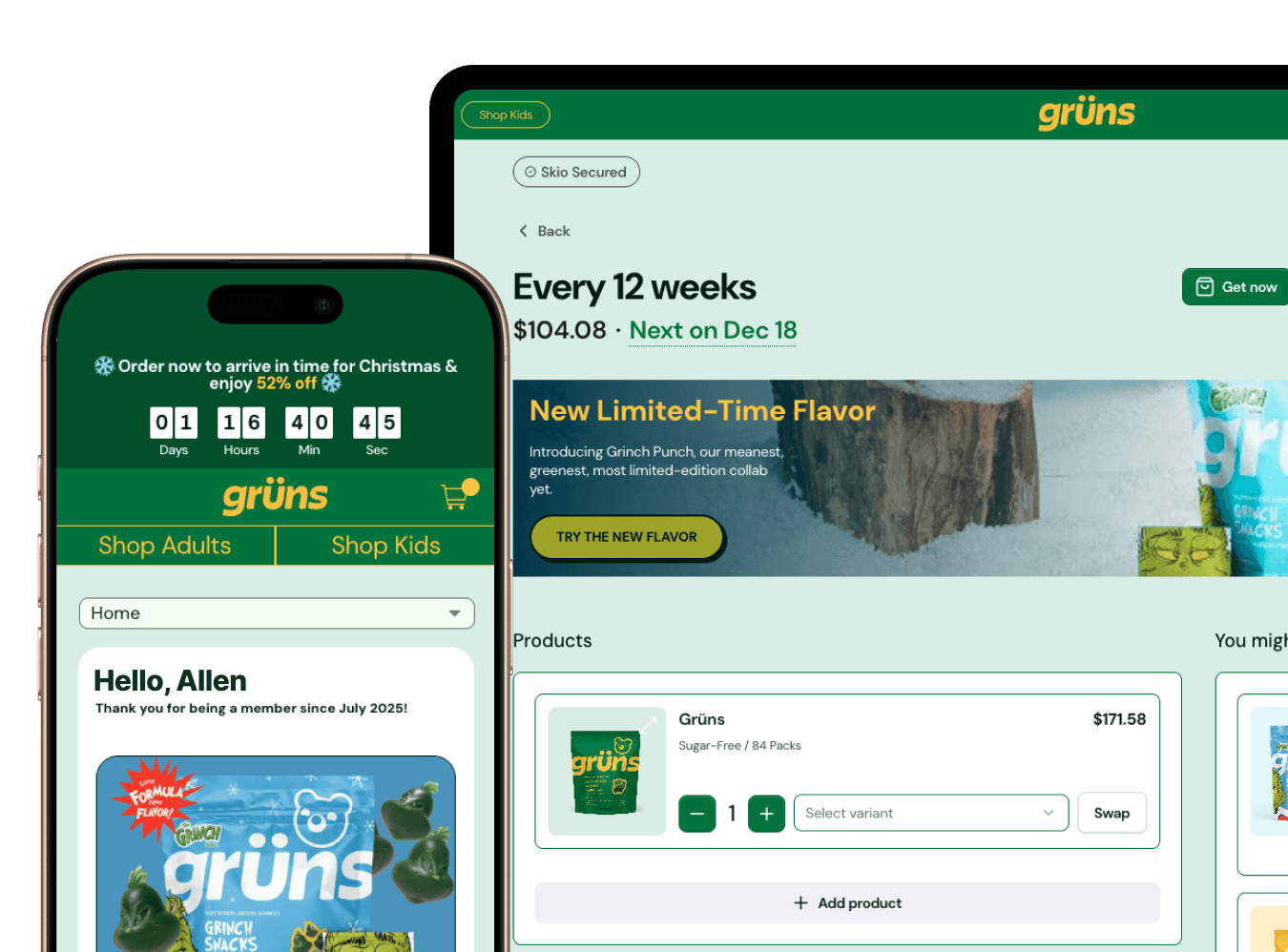
Self-serve flavor swaps. Subscribers change variants without contacting support, in a couple of taps, on their phone. Customer Portal v3 is built mobile-first for exactly this.
Passwordless login. A swap feature is useless if the customer can’t get into the portal. SIMULATE hit zero login issues after migrating, which unblocked every other self-serve action.
Easy variety toggles. Let customers move between a single-flavor plan and a mixed box without canceling and re-subscribing. If you sell variety boxes, a dynamic Build-a-Box lets subscribers pick their own mix within your rules.
Skip without cancel. A subscriber who’s tired of a flavor should be able to skip or swap that order without touching the rest of their subscription.
Self-serve flavor swaps in the customer portal are one of the most direct ways to reduce flavor-related churn and support tickets at the same time.
How to migrate existing subscribers to a segmented flavor model
Changing how flavors work for new subscribers is easy. Changing it for an existing base without breaking anyone’s order takes a plan.
Run a pre-migration audit. Identify subscribers with custom flavor configurations, manual overrides, or fulfillment exceptions. These are the subscriptions most likely to break.
Use bulk tools for the heavy lifting. Skio’s Bulk Operations let you swap products in bulk across every active subscription that contains a discontinued or renamed flavor, with a preview before anything goes live.
Communicate before you change. Explain the new flexibility, give subscribers a short portal walkthrough, and offer a one-time flavor reset so they can rebuild their mix.
Keep a fallback. Maintain legacy flavor logic for subscribers who don’t opt into the new model. Let them migrate on their own timeline.
Migrate flavor segmentation by maintaining legacy logic for existing subscribers while enabling the new model for future sign-ups. If your current platform forces your team into bulk editing flavor preferences every day, treat that as a red flag about the platform itself.
Fulfillment automation rules that prevent flavor mix-ups
Your warehouse doesn’t care about preference models. Pickers need clear SKU instructions on every order, every time.
Set a change cutoff window. Lock flavor changes a few days before processing. A three-day window is a common starting point. Changes made after the cutoff apply to the next cycle, which keeps inventory allocation accurate. Configure timing in your billing and orders settings.
Tag orders with flavor context. Order tags that carry the subscriber’s flavor plan alongside SKU IDs make it easier for your 3PL to spot an order that looks wrong before it ships.
Reserve stock for rotations. Allocate inventory for subscription flavor rotations before one-time orders draw it down, especially for limited flavors.
Decide your out-of-stock rule in advance. When a preferred flavor runs out, you need a default. Auto-substitute with the closest match, skip that item, or contact the customer. Pick one, document it, and tell subscribers what to expect.
Set a flavor change cutoff window before processing to maintain fulfillment accuracy. Gains In Bulk kept fulfillment tight while they grew subscribers 400% to 7,800 in three months, which is exactly the kind of growth that breaks sloppy SKU management. For the technical side of bundle errors, see how bundle errors break fulfillment and why operational automation that prevents fulfillment errors matters more than shiny marketing features.
Using segmentation data to drive product development
Flavor data is product research you’re already paying for. Use it.
Spot new flavor opportunities. If subscribers keep swapping into the same two flavors, that’s a signal about what your next launch should taste like.
Know when to retire a flavor. A flavor that’s skipped most of the time and swapped away from constantly is costing you subscribers. A skip rate above 60% is a reasonable trigger for review.
Time limited editions. Use preference data to decide when seasonal flavors launch and who sees them first.
Find winning combinations. Some flavor pairings retain better than others. Look at which mixes your longest-tenured subscribers keep.
Using Klaviyo for flavor preference campaigns
The last step is turning flavor data into messaging. Skio’s Klaviyo integration passes subscription data into Klaviyo, so you can build segments around what subscribers actually choose, skip, and swap.
Skip-triggered education. When a subscriber skips the same flavor twice, send a short note. “We noticed you keep skipping vanilla. Want to try our new chocolate instead?” Include a link that takes them straight to the swap.
Flavor-fatigue winbacks. Offer cancelled subscribers who cited “tired of the flavors” a flavor reset and a fresh mix on their return order.
Targeted launches. Send new flavor announcements first to subscribers whose swap history suggests they’ll like it.
This connects flavor management to the stack your team already runs, and it turns a churn signal into a campaign.
FAQ
How do I track which flavors are causing subscription cancellations?
Use your subscription platform’s skip rate and swap data by SKU, then cross-reference it with cancel reasons. A flavor that gets skipped most of the time or is consistently swapped away from is a churn driver.
Can I let customers exclude specific flavors from their subscription?
Yes, with a portal that supports self-serve swaps. Subscribers should be able to remove or replace flavors they don’t want without contacting support.
What happens to fulfillment when customers constantly change flavor preferences?
Set a change cutoff window, such as three days before processing, so warehouse allocation stays accurate. Changes made after the cutoff apply to the next cycle.
How do I segment subscribers by flavor preference for marketing campaigns?
Sync subscription data from your platform to Klaviyo or your ESP, then build segments based on which flavors subscribers choose, skip, or swap.
Should I offer single-flavor or multi-flavor subscriptions for better retention?
Offer both, and let customers move between them. Subscribers who control their own mix stick around longer than subscribers locked into a forced rotation.
Flavor fatigue is one of the few churn drivers you can see coming in your own data. Pull your skip rates this week and start with the worst offender.