
Table of Contents
Somewhere in your support queue right now is an email that says "please cancel my subscription." Someone on your team will open it, find the customer, cancel the subscription, and reply. Eight to twelve minutes, start to finish. Then they'll do it again.
If that's your workflow in 2026, your platform is the problem. Not your team, not your customers — the software that made a one-click action into a support ticket.
Enable a self-service customer portal with automated cancel flows to eliminate manual cancellation requests and recover a meaningful share of at-risk subscribers. Here's how to get out of the queue.
The hidden cost of doing this by hand
Manual cancellation workflows cost subscription brands a significant share of support capacity while creating friction that accelerates churn.
The obvious cost is time. A cancellation ticket takes eight to twelve minutes once you count reading it, locating the subscription, processing it, and replying. Multiply by your monthly cancellation volume and you have a number that will annoy you.
The less obvious cost is worse. Manual processing means a delay — typically 24 to 48 hours between the customer asking and anything happening. In that window, a few things go wrong:
The customer isn't sure it worked, so they email again. Now it's two tickets.
They get charged during the gap, and a routine cancellation becomes a refund request and possibly a chargeback.
They go looking for the cancel button, can't find one, and conclude you're hiding it. That's the version that ends up in a review.
And the worst cost is the one you never see. Every manual cancellation is a retention opportunity that didn't happen. A cancel flow could have offered a pause, a skip, or a swap at exactly the moment the customer was deciding. An email to support offers nothing — by the time a human replies, they've mentally moved on.
Why operators get stuck here
Nobody chooses this workflow. They inherit it.
The platform requires it. A lot of subscription tools simply don't give customers a self-service cancel path, so support becomes the interface by default.
Fear of the open door. The instinct that making cancellation easy means more cancellations. Intuitive, and wrong — friction doesn't prevent cancellation, it just delays it and makes the person angrier when it lands.
Nothing to offer instead. Without cancel flow infrastructure, there's no way to present alternatives, so support agents improvise saves inconsistently.
No reason data. Manual cancellations rarely get logged in a structured way, so you accumulate a year of cancellations and still can't say why people leave.
It scales badly, quietly. The workflow is survivable at fifty cancellations a month and underwater at five hundred, and the transition happens gradually enough that nobody flags it until the queue is on fire.
What self-service actually looks like
Self-service cancellation gives subscribers instant access to cancel while automatically offering retention alternatives like pause, skip, or discounts.
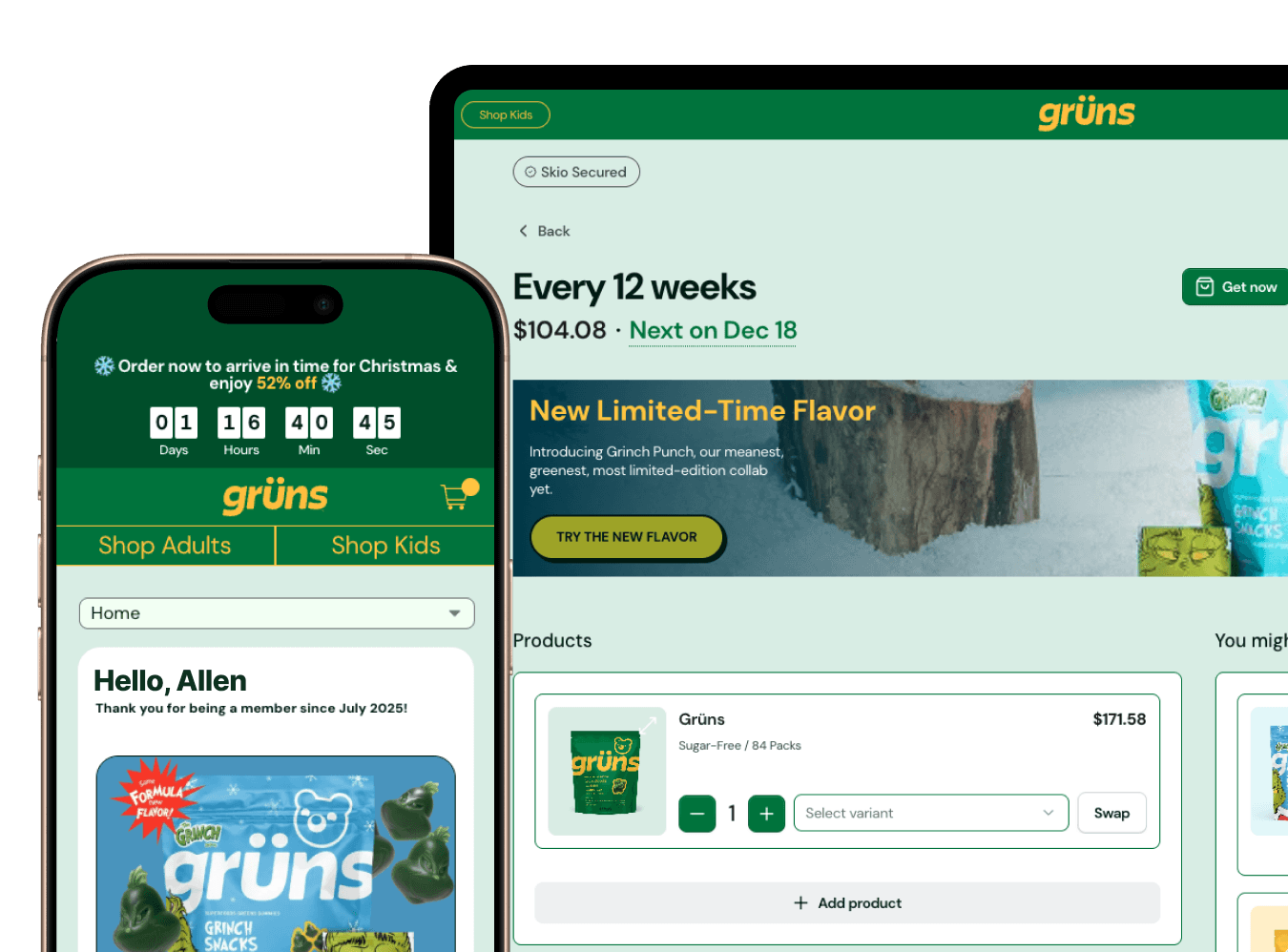
The subscriber logs into the portal — without a password, which matters more than it sounds. They find their subscription and hit cancel. Instead of an immediate confirmation, a cancel flow opens: two to four screens offering alternatives that address the most common reasons people leave. If they take one, the subscription is saved and the reason is logged. If they don't, they cancel, they're asked why, and it's processed instantly.
No ticket. No delay. No agent time. And critically, structured data on every single cancellation, whether saved or not.
The password point deserves emphasis, because it's the most common failure. If a customer has to reset a password to reach the portal, a real share of them will just email support instead — and you've rebuilt the manual workflow with extra steps. Magic login links remove that gate entirely: the customer taps a link or enters a code and they're in.
How cancel flows recover revenue you'd otherwise lose
Automated cancel flows recover a meaningful share of at-risk subscribers by offering pause, skip, swap, and discount options before final cancellation.
The insight underneath cancel flows: most cancellations aren't rejections of your product. They're responses to a specific, often temporary problem, and the customer reaches for the only lever they can find.
"I have too much." They don't want to stop, they want to skip. A skip button solves this completely.
"I'm traveling / it's the off-season." A pause with a resume date is the actual answer.
"Money's tight this month." A one-time discount or a longer interval addresses it without a permanent price cut.
"I'm bored of this flavor." A swap keeps the subscription and fixes the real complaint.
Each of those is a save that a support email would have handled inconsistently, if at all. A cancel flow handles all of them the same way every time, at 2am, without anyone on shift.
Setting up your portal for self-service
Enable portal access with passwordless login. Do this first — it's the gate everything else sits behind.
Turn on the cancel flow and build your retention offers. Start with two, add more once you have data.
Enable cancellation reason collection. Non-negotiable. This is the feedback loop that makes everything else improvable.
Set segment conditions if you want different offers for different subscribers — high-LTV customers can justify a richer save than someone on their first order.
Test the whole path on mobile. Most cancellations happen on a phone. Walk it yourself, on a real device, from the email link through to confirmation.
Customer Portal experience settings covers the configuration surface. Customer Portal v3 is built mobile-first, which matters here because the mobile cancel path is the one that actually gets used and the one most often left untested.
Designing cancel flows that work
The sequencing is most of the craft.
Lead with the lowest-friction option. Skip next order asks almost nothing of the customer and costs you almost nothing. It should be first.
Pause before discount. A pause costs zero margin. Leading with a discount gives money away to people who would have accepted a pause.
Swap for multi-SKU brands. If you have flavors or variants, this converts flavor fatigue — one of the most common cancel reasons — into a product change.
Keep discounts shallow and rare. Deep discounts in a cancel flow teach subscribers that threatening to cancel is how you get a deal. That's a lesson they'll apply repeatedly.
Always collect the reason, even when they cancel anyway. The people who leave are telling you how to keep the next ones.
Retention offer | When to use | Setup complexity |
|---|---|---|
Skip next order | Always — highest take rate, lowest cost | Easy |
Pause subscription | Inventory-heavy or seasonal products | Easy |
Delay next order | Brands with flexible timing | Easy |
One-time discount | Price-sensitive segments only | Medium |
Product swap | Multi-SKU and multi-flavor catalogs | Medium |
Two to four offers is the range. Beyond that you've built a maze, and mazes generate the exact reviews you're trying to avoid.
When they still want to cancel
Let them. Immediately, in the same session, without another screen.
This is where a lot of brands lose their nerve and start adding steps. Don't. Dark patterns — burying the final button, forcing a phone call, requiring a reason before proceeding — do not save subscriptions. They generate chargebacks, one-star reviews, and in some jurisdictions, regulatory attention. You'll lose the subscriber either way; the only variable is whether they leave neutral or hostile.
Handle the exit well instead:
Confirm the cancellation clearly, in writing, immediately
Log the structured reason
Tag them for a winback campaign 30 to 60 days out
Segment that winback by cancel reason — a price-sensitive customer and a flavor-fatigued one need completely different emails
A clean cancellation is a customer who might come back. A hostile one never does.
Tracking whether any of this is working
Deflection rate by offer type. Which saves are actually landing. Kill the ones that don't and promote the ones that do.
Cancellation reasons, ranked. Your product and ops roadmap, written by the people leaving.
Time-to-cancel after a save. If subscribers accept a pause and cancel three weeks later, you delayed churn rather than preventing it — that's a different problem.
Offer performance by segment. New subscribers and two-year veterans respond to different things.
Active versus passive cancellation split. If most of your churn is failed payments rather than deliberate cancellations, your problem is dunning, not cancel flows.
The Cancel Flow Dashboard holds all of this. The last metric is the one that reframes projects — plenty of teams build an elaborate cancel flow while the majority of their churn is coming from declined cards.
Mistakes that undo the whole thing
Hiding the cancel button. They'll email support, and you've rebuilt the manual workflow you were escaping.
Discounting too early in the flow. Trains subscribers to cancel for savings.
Not collecting reasons. You get the operational relief and none of the intelligence.
Never testing mobile login. Most cancellations happen on a phone. If the login is broken there, adoption dies quietly.
Collecting reason data and never reading it. The most common failure of all. Put a recurring calendar hold on reviewing it, or it won't happen.
What to do with the time you get back
Self-service should substantially reduce cancellation-related tickets and drop resolution time on them to effectively zero. That capacity doesn't disappear — you get to redeploy it.
The highest-value uses: proactive outreach to high-LTV subscribers before they're at risk, working the cancellation reason data into product and ops changes, and building segmented re-engagement for people who already left. All of that is work your team couldn't do while triaging tickets, and all of it compounds in a way ticket-clearing never does.
Self-service cancellation substantially reduces cancellation-related support tickets while improving customer experience through instant processing.
FAQ
How do I set up self-service cancellations?
Enable portal access with passwordless login, configure a cancel flow with retention offers, and make sure cancel is reachable in two to three clicks. Test the full path on mobile before launch.
Will self-service cancellation increase my churn rate?
It generally doesn't. Friction delays cancellations rather than preventing them, and it converts a neutral exit into an angry one. Meanwhile the cancel flow gives you save opportunities that a support email never offered.
What retention offers should I include?
Start with skip and pause — highest take rates, lowest cost. Add product swap if you have multiple SKUs, and a shallow one-time discount for price-sensitive segments. Always collect the reason.
How do I track performance?
The Cancel Flow Dashboard shows deflection rate by offer, cancellation reasons, and segment performance. Compare active cancellations against passive ones to see where your churn is really coming from.
What if customers still email support to cancel?
Have agents reply with a magic login link rather than processing manually. It resolves the request and teaches the customer where the portal is, so the next one self-serves.
How many steps should a cancel flow have?
Two to four retention offers, maximum. Lead with the lowest-friction ones and always allow final cancellation in the same session.
The bottom line
Manual cancellation processing is a workflow your platform imposed on you, and it costs you twice — support hours on the way out, and every save you never got to offer. Turn on the portal, build a short cancel flow that leads with skip and pause, let people leave cleanly when they want to, and read the reason data. The queue empties and the saves start arriving on their own.