
Table of Contents
Most subscription brands treat cross-sell as a nice-to-have and generate 1 to 3 percent of revenue from it. The brands that break past that plateau treat it like a channel, with structured systems running across the portal, email, and checkout at the same time. Brands hitting 5 percent cross-sell revenue have structured upsell systems across the portal, email, and checkout, not random product suggestions.
Five percent is the line where cross-sell stops being a rounding error and becomes a revenue stream worth optimizing like any other. Getting there isn't about a single clever tactic. It's about running all three channels together, because each one catches a different kind of intent.
Why 5% is the benchmark that separates good from great
Below 5 percent, cross-sell is usually an afterthought: a generic "you might also like" carousel that nobody tuned. At 5 percent and up, it's a system. The brands that hit it aren't luckier, they've made cross-sell frictionless in the places subscribers already spend time. That's the whole move. Make adding a product take one click, in the moment the customer is already engaged, and the attach rate climbs on its own.
The three places cross-sell revenue actually happens
Cross-sell revenue comes from three places: portal upsells, email Quick Actions, and checkout Smart Upsell, each serving different subscriber intent.
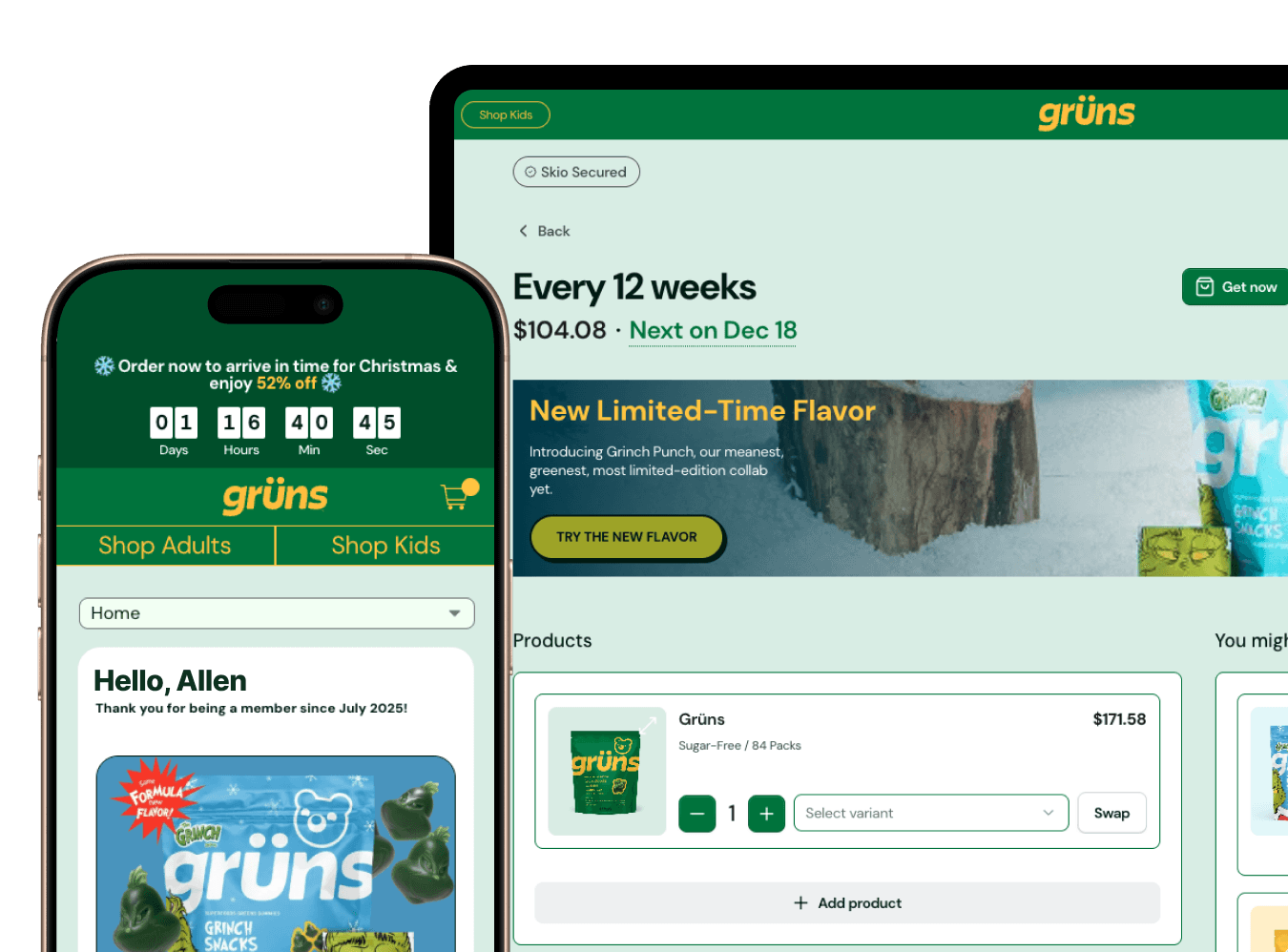
Customer Portal one-time upsells. Where subscribers actively manage their orders and can add a product with one click. This is convenience intent.
Email Quick Actions. Klaviyo flows that let subscribers add products without logging in. This is triggered-relevance intent.
Smart Upsell at checkout. Pre-purchase cross-sell for new subscribers who haven't seen your full catalog yet. This is discovery intent.
Brands that lean on only one channel plateau around 2 percent. You need all three working together to reach 5.
Portal one-time upsells: the highest-converting channel
Portal one-time upsells convert highest because subscribers are already managing their order, so adding a product is one click, not a separate purchase decision. They're in "manage my order" mode, which is the most receptive state a subscriber gets into. One-time upsells let them add products to their next shipment without touching their subscription frequency.
Keep it to 3 to 5 products. More than that and decision fatigue kills the conversion. Use product logic to filter by what they already subscribe to, so coffee subscribers see coffee accessories rather than dog treats. Then watch add-on attach rate in your Products Dashboard: if it's under 8 percent, your product selection is the problem, not the channel.
Email Quick Actions: zero-friction upsells that don't require login
Quick Actions let subscribers add products from email without logging in, so the link does the work and conversion happens in one click. They're magic links embedded in Klaviyo flows. The best-performing triggers are order confirmation (add accessories), the pre-ship reminder (add a one-time product), and reactivation flows (add a gift).
Set the link up in Quick Actions, drop it into your Klaviyo flow, and test subject lines that name the product rather than the action. "Add [Product] to your next shipment" beats "Customize your order" because it tells the subscriber exactly what one tap gets them.
Smart Upsell at checkout: cross-sell before the first order ships
Smart Upsell at checkout captures cross-sell intent when it's highest, before the first order ships, not after. Checkout is peak intent, and most brands sleep on it because they assume cross-sell starts after order one. Smart Upsell shows complementary products based on cart contents, so coffee pairs with a grinder and dog food pairs with treats. Because these ship with the first order, there's no "wait until next month" friction. Track upsell attach rate in your Products Dashboard, and if it's under 5 percent, your pairing logic needs work.
The metrics that tell you if you're on track to 5%
Track cross-sell revenue as a percent of total subscription revenue, add-on attach rate, and revenue per subscriber, since these three show whether you're on track to 5 percent. Watch four numbers weekly:
Cross-sell revenue as a percent of total subscription revenue (your headline metric)
Add-on attach rate: the percent of subscribers who add products
Average add-on order value
Revenue per subscriber from cross-sell
The diagnostic is in how they move together. High attach rate but low revenue percent means your add-on AOV is too small, so you're selling the wrong products. Low attach rate but high AOV means you aren't showing upsells to enough people, so expand your Quick Action flows. The Products Dashboard is where all four live.
How to choose which products to cross-sell (and which to skip)
Not every SKU belongs in a cross-sell flow, and most brands show too many, which kills conversion. Start with products that pair naturally with the existing subscription: coffee and a grinder, dog food and treats, skincare and tools. Avoid cross-selling anything that competes with the core subscription, so don't push a different flavor at a customer who just chose one. Test seasonal or limited-edition products first, since urgency drives action and a flop is easy to pull without disrupting the core catalog. Then let the data decide: double down on the products with the highest attach rate and kill the rest.
The 90-day sprint to 5% cross-sell revenue
Weeks 1-2. Set up one-time upsells in the Customer Portal. Choose 3 to 5 products, enable them, and test the flow yourself.
Weeks 3-4. Build your first Quick Action flow in Klaviyo. Start with order confirmation and a single high-converting product.
Weeks 5-6. Enable Smart Upsell at checkout. Pair complementary products and set a small discount if you need to drive first-time adoption.
Weeks 7-8. Track metrics weekly: add-on attach rate, cross-sell revenue percent, revenue per subscriber.
Weeks 9-12. Optimize on the data. Kill low performers, expand the Quick Action flows that work, and test new pairings at checkout.
By day 90 you should see cross-sell revenue move from 1 to 2 percent toward 4 to 5 percent. If it doesn't, the problem is almost always product selection, not setup.
Common mistakes that cap cross-sell revenue at 2%
Brands cap at 2 percent cross-sell revenue by showing too many products, not using Quick Actions, and ignoring Analytics data. The full list:
Showing 10-plus products and killing decision-making. Cap it at 5.
Treating cross-sell as a one-time setup instead of a channel you test monthly.
Skipping Quick Actions, so subscribers have to log in to add a product. Most won't bother.
Cross-selling the wrong products, like a competing flavor instead of a complementary category.
Not tracking attach rate and revenue per subscriber, which means you're guessing.
What to do once you hit 5%
Five percent is the baseline for a mature program, not the ceiling. From there, segment upsells by cohort so new subscribers see starter products and loyal ones see premium add-ons. Test pre-configured bundles that raise AOV. Expand Quick Actions into more flows: pause prevention, reactivation, milestone rewards. Brands running 7 to 10 percent treat cross-sell like a standalone business unit with dedicated product selection and seasonal rotations. At that level it isn't just revenue, it's retention, since subscribers who add products stay longer.
FAQ
What percentage of subscription revenue should come from cross-sells?
5 percent is the benchmark for a mature program. Most brands plateau at 1 to 3 percent without structured upsell systems across the portal, email, and checkout.
What's the difference between a one-time upsell and a subscription upsell?
One-time upsells add products to a single shipment without changing subscription frequency. Subscription upsells add recurring products that ship every cycle.
How do I track cross-sell revenue in Skio?
Use the Products Dashboard to track add-on attach rate and revenue per subscriber. Filter by one-time products to isolate cross-sell performance.
Should I discount one-time add-ons to drive cross-sell revenue?
Test it. Some brands see higher attach rates with a 10 to 15 percent discount on add-ons. Others find complementary products sell at full price when the pairing is strong.
What's the fastest way to increase cross-sell revenue?
Enable one-time upsells in the Customer Portal first, since it's the highest-converting channel. Then layer in Quick Actions in Klaviyo for zero-friction email upsells.
How many products should I show in the portal for one-time upsells?
3 to 5 max. More than that and decision fatigue kills conversion. Use product logic to show only relevant pairings.
The bottom line
Cross-sell hits 5 percent when it stops being a carousel and starts being a system. Run the portal, email, and checkout together, cap the choices, track the four metrics, and let the data pick your products.