
Table of Contents
Your Subscription Portal Is Harder to Use Than Netflix
Nobody has ever reset a Netflix password to skip an episode. You open the app, you're in, you watch. Meanwhile your subscribers are staring at a login screen, trying the password they made eight months ago, failing twice, and firing off a support ticket that says "I just want to pause my order."
Legacy subscription platforms still force account creation before checkout. Extra form fields, a password to invent, an email to verify. Then 30 to 90 days pass before the customer needs to touch their account again, and the password is long gone. Login issues consistently rank among the biggest drivers of subscription support volume, and every reset email is a moment where the customer quietly asks whether this subscription is worth the hassle.
The fix already exists. Netflix, Spotify, and every serious consumer subscription figured it out years ago. Your account gets created for you, and you log in with your email or phone. Subscription commerce is just late to the party.
What Passwordless Login Actually Means
Passwordless login authenticates customers without making them create or remember a password. Three common flavors exist. Magic links sent to email, SMS codes, and email verification codes.
Auto-account creation is the other half of the equation. The system builds the customer account automatically at checkout. There's no separate "Create Account" step, no password field, no verification gate before they can buy. The customer completes their purchase, the account exists in the background, and when they eventually need to manage their subscription, a magic link gets them in.
This is exactly how Netflix works. You subscribe, they create your account, and you authenticate later through your email or phone. Your customers already understand this pattern because they use it every day.
How Much Friction Are Passwords Really Causing?
Here's the uncomfortable math on password-based portals:
Login and password issues are one of the largest categories of subscription support tickets, often a meaningful share of total volume
A password reset flow forces the customer to leave your site, check email, create a new password, and try again. That's minutes of friction for a task that should take seconds
Checkout research has repeatedly shown that every extra form field costs conversion. A password field at checkout is a conversion tax you're choosing to pay
Customers who hit a login wall while trying to manage their subscription often don't try again. Some call their bank instead, and now a fixable frustration is a chargeback
Skio merchants who move to passwordless login see login-related tickets drop sharply. SIMULATE eliminated login headaches entirely and cut support tickets in the process.
How Auto-Account Creation Works
The difference is easiest to see side by side:
Traditional account creation | Auto-account creation | |
|---|---|---|
Steps to first order | 6 to 8 (create account, set password, verify email, checkout) | 3 (add to cart, checkout, done) |
Password required | Yes, at signup | Never |
Where drop-off happens | Email verification and password creation | Nowhere. There's nothing to abandon |
First login later | Remember password or reset it | Click a magic link |
One important distinction. Auto-account creation is not guest checkout. The customer absolutely gets an account with full order history and subscription controls. It's just created for them instead of by them. Skio supports this out of the box, and you can read how the login options work in the customer login experience guide.
Why This Matters for Retention, Not Just Acquisition
The first time a subscriber tries to manage their subscription is a high-risk moment. Maybe they want to skip a month because they're traveling. Maybe they want to swap flavors. If they can't get in, the path of least resistance is a support ticket or a cancellation, and "I couldn't log in so I gave up" is one of the dumbest ways to lose a customer.
Passwordless login removes that failure point entirely. There is no password to forget, so there is no reset flow to abandon. Auto-account creation means the account was ready before they ever needed it.
This matters double for older demographics. Subscribers who are less comfortable with password managers hit login walls harder and abandon faster. A magic link in their inbox is something everyone can click. MatchaBar saw this firsthand when eliminating support blockers for their subscriber base.
The Netflix Model, Applied to Your Store
The streaming giants all converged on the same UX. Subscribe first, account created automatically, authenticate later with email or phone. No password requirements at signup, no verification wall before you can start.
That convergence wasn't an accident. These companies A/B test everything, and frictionless entry won. The consumer expectation is now set, and most subscription commerce platforms are years behind it. The brands winning on subscriptions are the ones matching the expectation instead of fighting it.
How Skio Implements Passwordless Login
Here's what the flow looks like on Skio:
Accounts are auto-created at checkout. No signup step exists
When a customer needs to manage their subscription, they receive a magic link via email. One click, they're in the portal
Magic links are valid for a limited window and expire for security
SMS login is available for brands that prefer text-based authentication
Brands that want it can enable dual login, keeping traditional password login as an option alongside passwordless
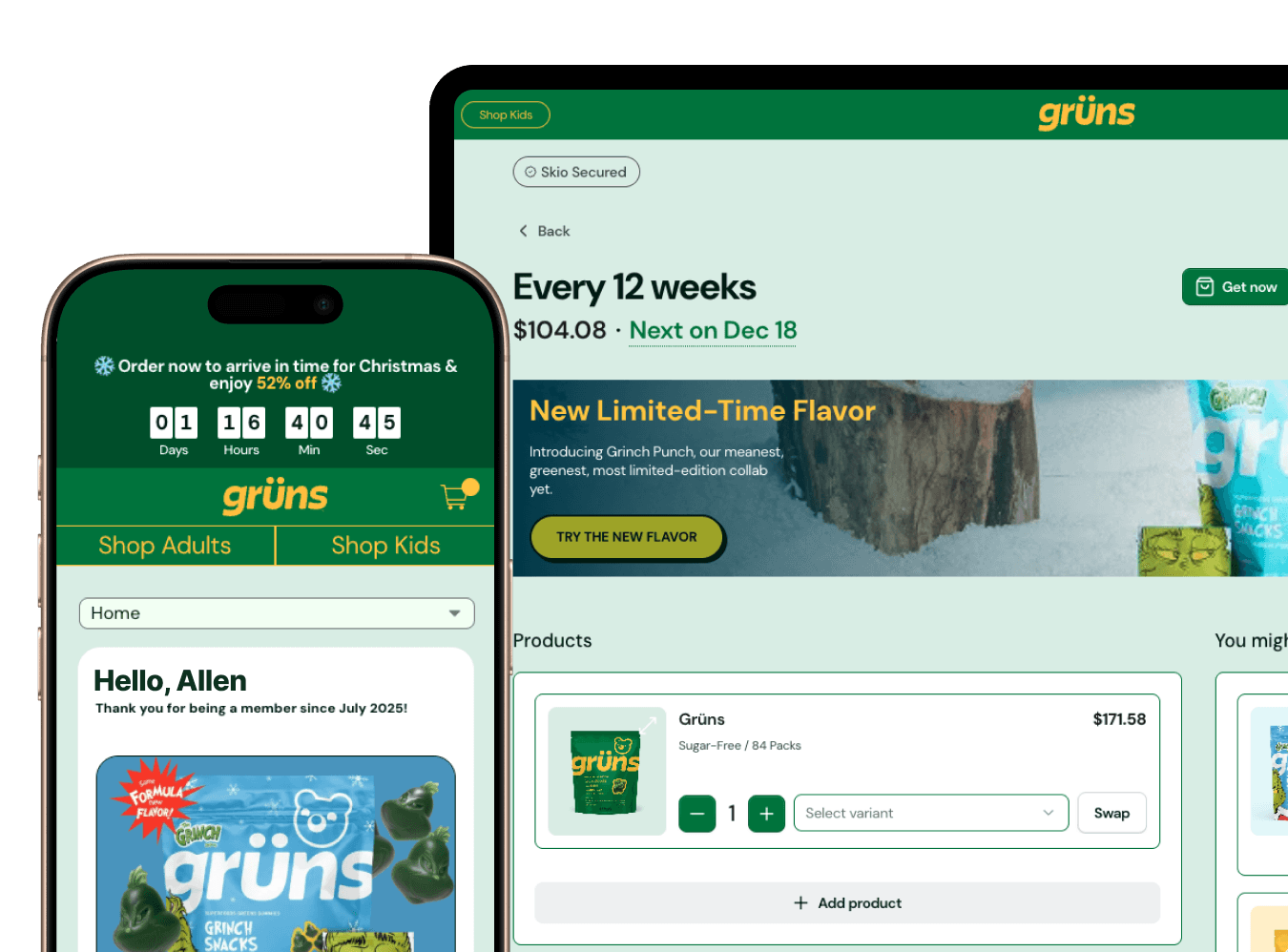
Customer Portal v3 is built for this by default. The portal assumes passwordless entry, so the experience is one click from email to managing a subscription, on any device, with no app download.
When Passwordless Login Doesn't Work (And How to Handle It)
Honesty time. Passwordless isn't frictionless for literally everyone.
Some customers genuinely prefer passwords. They run password managers and view magic links with suspicion. Dual login covers them, passwordless by default with password as an option.
Aggressive spam filters occasionally eat magic link emails. SMS login is the backup there, or the customer can set a password if they'd rather.
And some industries carry compliance requirements that mandate password-based authentication. Know your regulatory situation before flipping the switch. For the overwhelming majority of DTC brands, none of this applies, but the edge cases are worth naming.
How to Measure the Impact
Turn this on and track four things:
Login-related support ticket volume, before and after. This is your headline number
Portal login success rate. What share of customers get in on the first attempt
Time to first login after purchase. Faster first logins mean subscribers actually engage with the portal
Cancellation reasons. Watch "couldn't log in" and "too complicated" fall off the list
If login tickets drop and portal engagement rises, the change paid for itself in the first month.
Implementation Checklist: Going Passwordless
Enable auto-account creation at checkout so no separate signup step exists
Configure your magic link email template. Branded, clear, mobile-friendly
Set up SMS login as a backup channel
Add a "Send me a login link" button to your portal login page
Update your subscription confirmation email to explain how login works
Train your CX team on the flow so they can explain it to confused customers and send magic links on demand
Optionally enable dual login for customers who want a traditional password
Most brands can complete this in an afternoon. Setup details live in the magic login links doc.
FAQ
What is passwordless login for subscriptions?
Passwordless login uses email or SMS verification instead of passwords. The customer receives a magic link or code, clicks it, and lands in their subscription portal without creating or remembering anything.
How does auto-account creation work?
The account is built automatically at checkout with no separate signup step. The customer completes their purchase and the system creates their account in the background.
Is passwordless login secure?
Yes. Magic links are single-use tokens that expire after a limited window. Removing passwords also removes weak passwords and password reuse from your threat model. Email access is already the security backbone of every password reset flow anyway.
Do customers prefer passwordless login?
Most do, because it's faster and there's nothing to remember. Dual login covers the customers who prefer traditional authentication.
How much does passwordless login reduce support tickets?
Login issues are one of the largest drivers of subscription support volume, and Skio merchants who go passwordless see that category drop sharply. Track your own before-and-after ticket volume to quantify it for your brand.
Can I use passwordless login with Shopify?
Yes. Skio is Shopify-native and supports passwordless login via magic links or SMS. Customers reach their portal without ever creating a password.